Next.js · 2026
Amanot
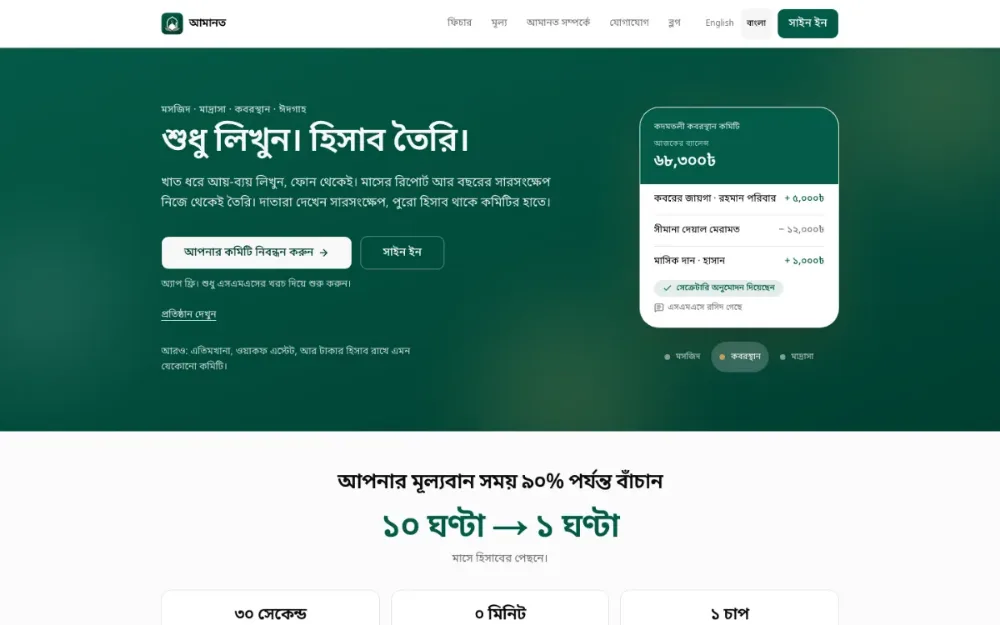
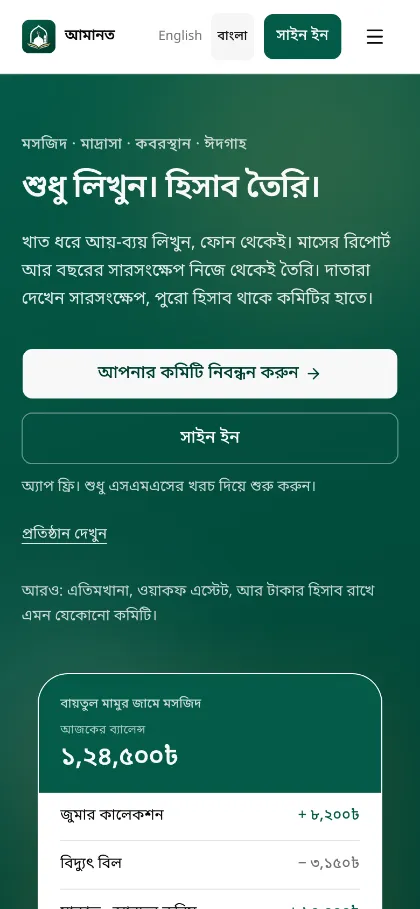
Bookkeeping for mosque and madrasa committees — write it down once, and the accounts, receipts, and reports are ready.
- Client
- Amanot
- Role
- New build
- Year
- 2026
- Stack
- Next.jsTypeScriptSMS gatewayVercel
The brief
Thousands of mosques, madrasas, graveyards, Eidgahs, orphanages, and waqf estates in Bangladesh are run by volunteer committees who keep their accounts in notebooks. Month-end totals take hours, donors rarely see where their money went, and handing the books to a new committee is painful. Amanot's promise is in its tagline: just write it down — the accounts are ready.
What I built
- Income and expenses by category, entered from a phone in seconds, with multi-member approval before anything counts.
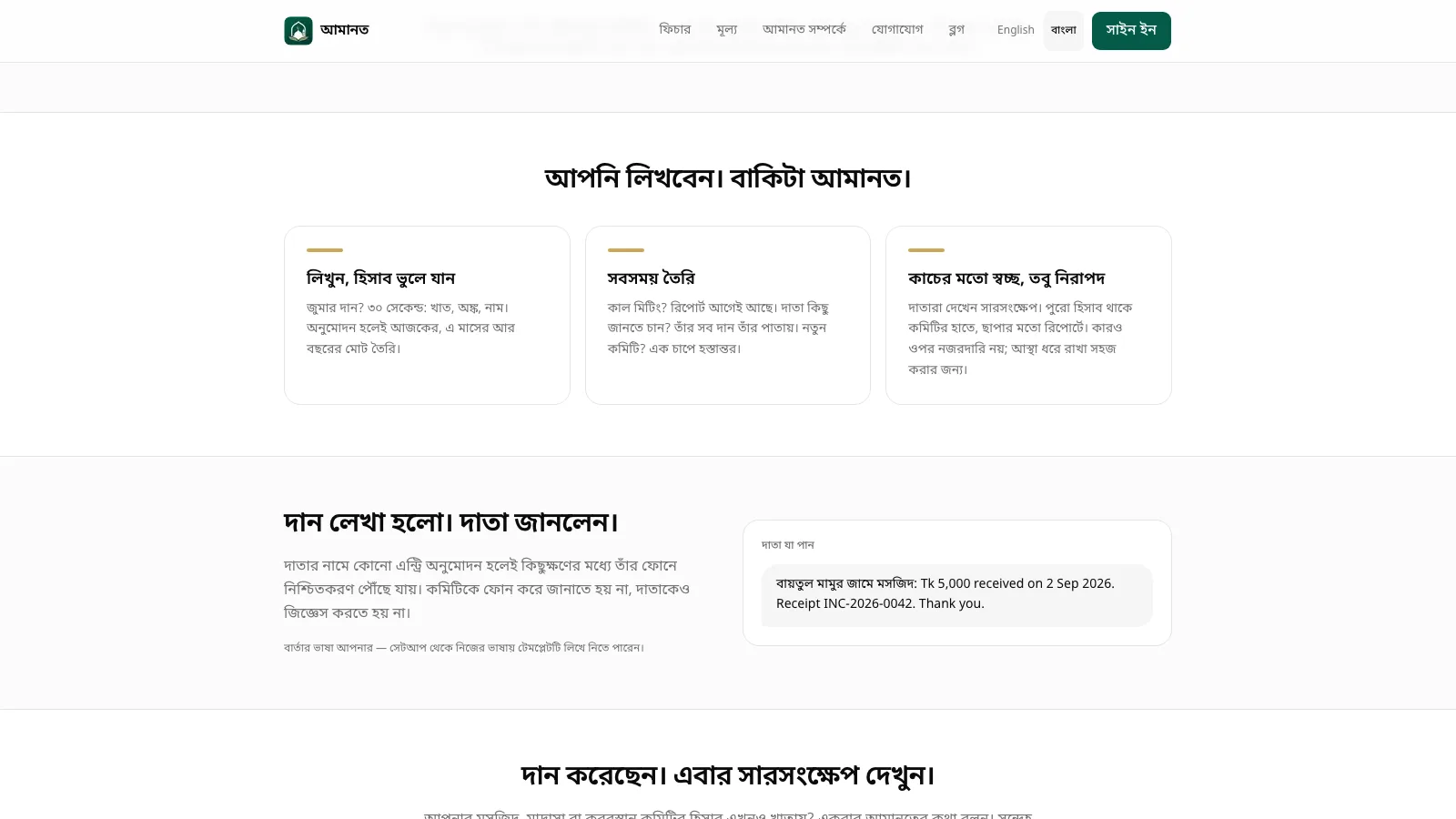
- Totals that keep themselves — daily, monthly, and yearly, with printable monthly reports, yearly summaries, and handover statements for committee changes.
- Donor profiles and pledges (monthly, quarterly, yearly) with reminders.
- SMS receipts — when an entry is approved, the donor gets a confirmation with a receipt number, without anyone making a call.
- In-kind donations tracked as they're received, sold, or used.
- Transfers between accounts — cash, bank, and mobile wallets.
- A public page for each institution, with bKash and Nagad donation QR codes, committee details, and a photo gallery.
- Editable roles and an audit log, so trust doesn't depend on any one person.
Under the hood
A bilingual (Bangla and English) Next.js app, phone-first, deployed on Vercel. The business model is deliberately simple: the app is free; committees pay only for the SMS they send, with an optional yearly supporter plan.
Next case studyLevelUp Soccer Training